The Mudhif
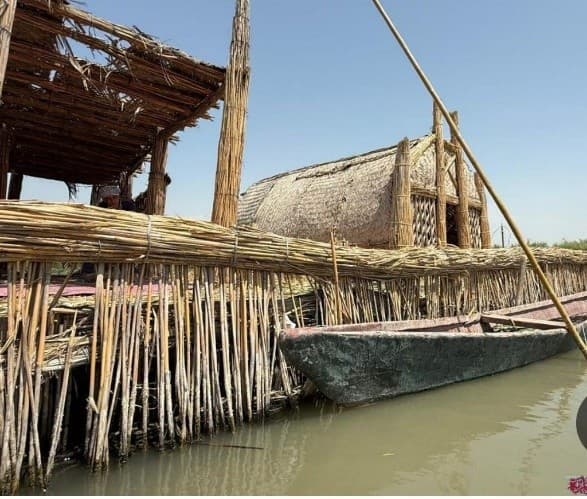
The Mudhif is the traditional guesthouse of the Marsh Arabs and inhabitants of southern Iraq. It stands as a symbol of hospitality and social cooperation, where guests are welcomed, agreements are made, and disputes are resolved. In Ramadan, it hosts communal Iftar and Suhoor gatherings, while in Muharram, it is dedicated to Hussein mourning councils. Remarkably, it is built almost entirely from reeds and papyrus, without cement or iron.
Construction of the Mudhif
Materials: Reeds are used for columns and arches, while papyrus covers the roof and walls. Natural ropes made from reeds or fiber bind the structure together.
The Process: Built on high ground to avoid flooding, strong reed bundles are planted in the ground and bent to form meeting arches—the Mudhif's signature shape. This arched design is aerodynamic, with natural ventilation that keeps it cool in summer and relatively warm in winter. It is a communal effort, often built by the village in just a few days.
The Sarifa
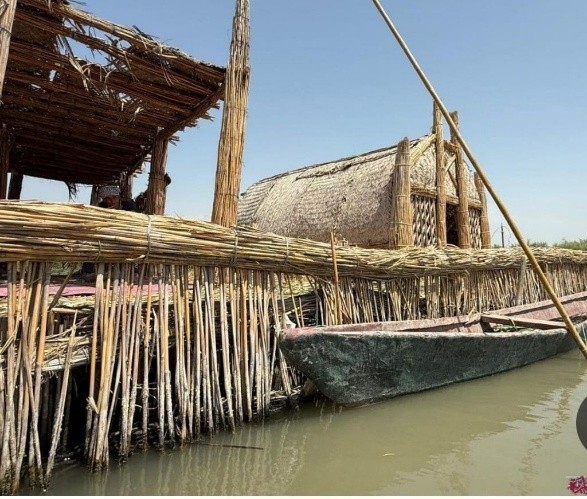
The Sarifa is the summer version of the marsh house. Also built from reeds and papyrus, it features open sides or minimal walls to maximize airflow during the scorching summer months. Simpler and smaller than the Mudhif, it serves as the daily family dwelling for rest during day and night.
The Mashhoof
The Mashhoof is a traditional wooden canoe used for daily transport, fishing, and trade. Long, slender, and lightweight, it is perfectly designed to navigate the shallow waters and dense reed beds of the marshes. Propelled by a long pole called a "Mirdi", the Mashhoof remains an enduring symbol of the unique water-based lifestyle of the marshes.
The Clay Tannour
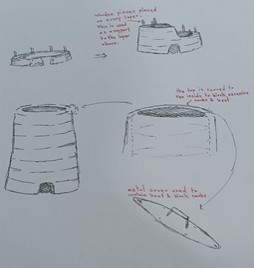
The clay tannour is a traditional cylindrical oven used to bake the famous Iraqi bread ("Khobz"). Made by women from local red clay mixed with straw and water, it is a staple of rural life.
Craftsmanship: The clay is mixed into a paste, formed into a cylinder on a base, and dried in the shade to prevent cracking. Once hardened by fire, it bakes bread that is known for its distinct taste. The Tannour represents the simplicity and self-sufficiency of the marsh heritage.